
Everyday life, stress & balance
Acid-base balance
What happens after a meal, during intense training, or after a glass of alcohol? Discover the connections between acid formation, the body's own buffers, and your mineral supply.
Nutrition
What does your food have to do with your balance?
A meal provides energy and nutrients. However, its processing also produces acids, for example during the breakdown of certain protein components. Vegetables and fruit, on the other hand, often provide compounds that turn into bases during metabolism. The composition of your meals therefore influences how much acid must be excreted.
Protein is part of the picture. The crucial factor is the overall choice of food: it determines the acid balance and at the same time provides minerals. The sour taste alone says little about this.
Sport & Exertion
What happens to the muscle during intense exertion
A sprint or intense interval demands a lot of energy from your muscles in a short period of time. This can cause the pH value in the muscle to drop. The body's own buffers and the transport of hydrogen ions counteract these changes. This concerns processes during high exertion, not the same situation as with a meal.
Subsequent recovery requires an appropriate supply of energy, fluids, and nutrients. Minerals fulfill specific roles in this, for instance in muscle function and electrolyte balance. How buffering and supply are interconnected therefore deserves closer examination.
In the body
How your body
balances acids
Buffer systems, respiration, and the kidneys work together to ensure the right conditions for your cells.
01 / Buffer systems
Absorb and release acid
Buffers bind hydrogen ions or release them again. In this way, they limit changes in pH levels in cells and body fluids.
02 / Respiration
Release carbon dioxide
Metabolism produces carbon dioxide, which is released through the lungs. In the body, it exists in equilibrium with carbonic acid and bicarbonate.
How much carbon dioxide you exhale therefore also influences the acid-base balance.
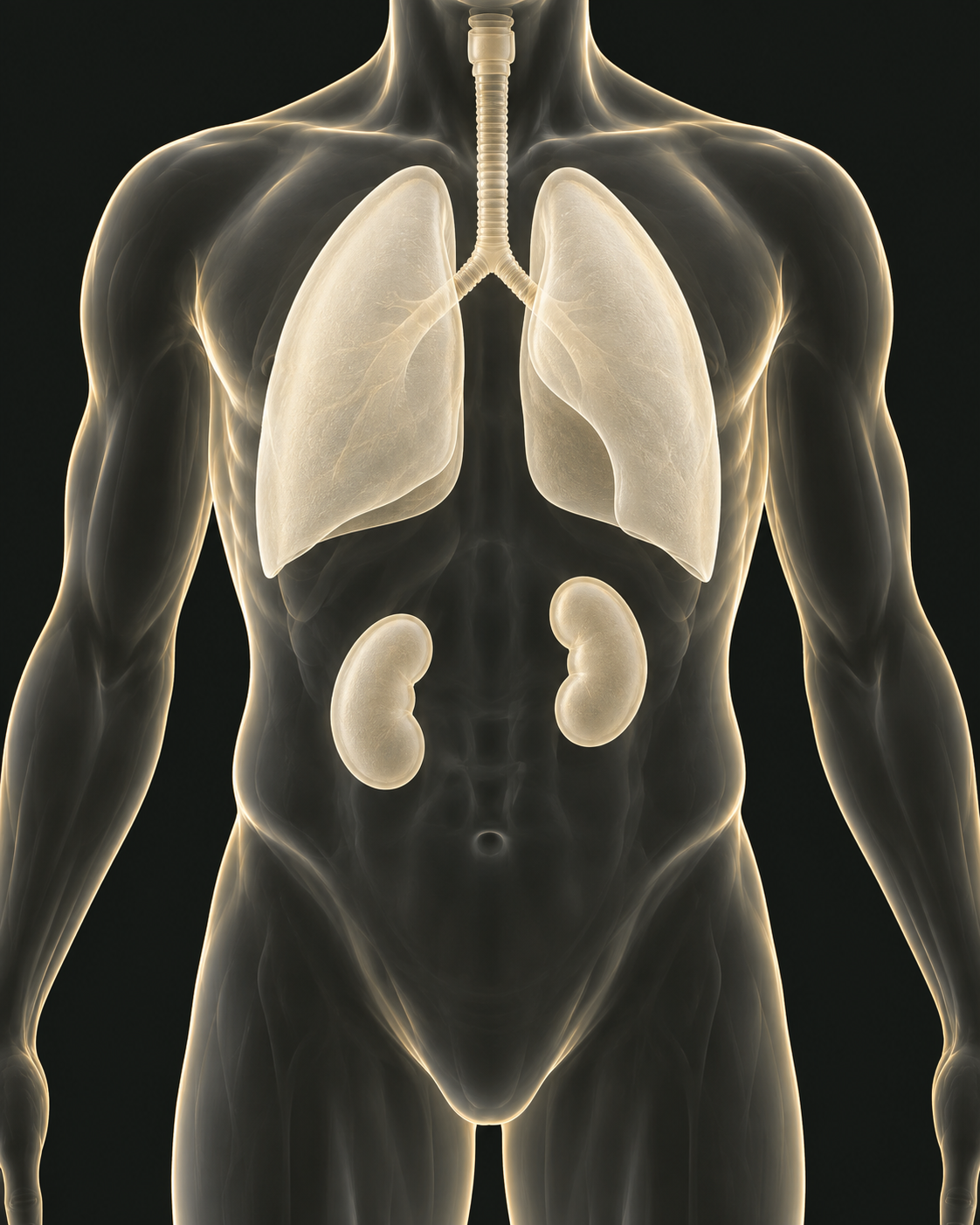
03 / Kidneys
Adjust acid excretion
The kidneys excrete acid and help to maintain or regenerate bicarbonate. They adapt these functions to the metabolic situation.
Thus, acid excretion can change with diet, while blood pH remains tightly regulated.
Alcohol & Metabolism
What happens after your last drink
Alcohol is primarily broken down in the liver. It can also increase fluid excretion and irritate the stomach lining. Discomfort after drinking therefore has various causes; it cannot be explained simply as "hyperacidity."
Acid-base imbalances are also possible, particularly with heavy alcohol consumption combined with insufficient food intake, such as due to vomiting. Such disorders are medically serious and should not be equated with a typical hangover. The article contextualizes alcohol metabolism, fluid balance, and these specific situations.
Heartburn & Stomach Acid
When acid ends up in the wrong place
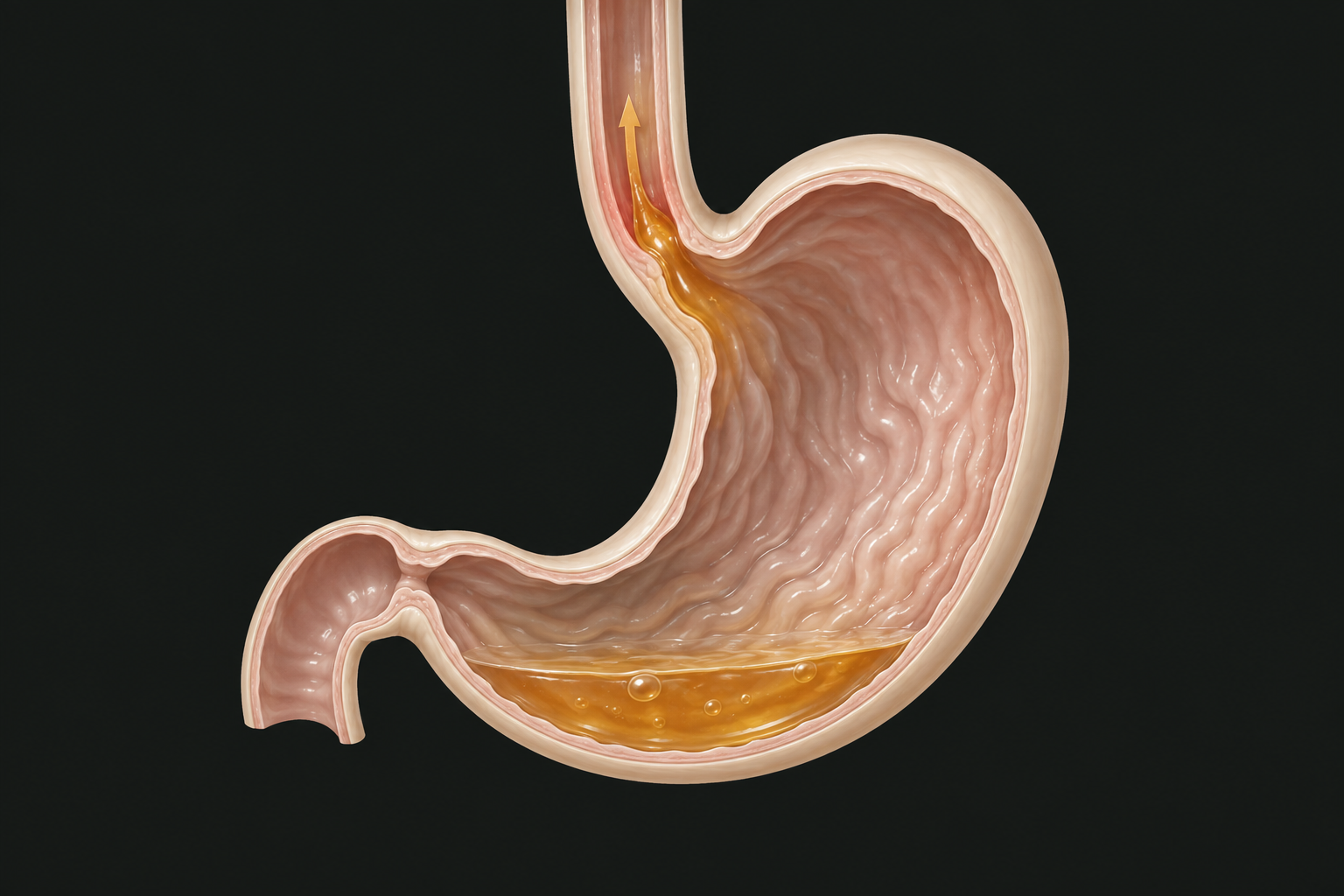
After a large meal or when lying down, you may feel a burning sensation behind the breastbone. One possible cause is reflux: stomach contents flow back into the esophagus. The acid, which is needed for digestion in the stomach, can irritate the mucous membrane there.
The article explains what promotes reflux, what acid neutralization means, and how this differs from the overall acid-base balance. Mineral supplementation and reflux treatment are different topics. Frequent or severe heartburn, as well as difficulty swallowing, should be medically evaluated.
Buffer & mineral supply
What roles minerals play in this process
We obtain minerals through our diet. They perform various functions in the body: phosphate itself is a component of a buffer system. Other mineral functions relate, for example, to electrolyte balance or energy utilization.
Phosphate can accept or donate hydrogen ions. This property plays a role in, among other things, cells and the excretion of acid via the kidneys. Simply put, phosphate can bind acid and thus helps to limit changes in pH levels.
This describes the function of the body's own phosphate compounds. It cannot be inferred from this that a dietary supplement treats an acid-base disorder or alters blood pH.
Electrolytes are involved in fluid distribution and signal transmission in nerves and muscles. Magnesium contributes to electrolyte balance. This is another function of mineral supplementation, alongside acid-base regulation.
For your body to be able to use energy from food, it also needs minerals. Magnesium, calcium, and phosphorus contribute to a normal energy metabolism. They do not provide energy themselves, but they play a role in its processing.
For your nutritional needs, both the selection of food and the amount of nutrients it contains are important. Targeted supplementation focuses on mineral intake. You can find the amounts provided by FINXFUL Basic on the product page.
View minerals in FINXFUL BasicAnswered briefly
Frequently Asked Questions
Are electrolyte balance and acid-base balance the same?
No. Both systems are related, but they are not identical. Electrolytes are charged particles. The acid-base balance concerns the regulation of acid-base ratios.
Why are stomach acid and acid-base balance explained separately?
The body requires different conditions depending on the location. An acidic environment is normal in the stomach. In the blood, however, the pH value is kept within a narrow range. Heartburn therefore does not automatically describe a disturbance of the entire acid-base balance.
What should I consider for my nutrient intake?
Ensure a varied diet and an intake of fluids and nutrients that corresponds to the level of exertion. Protein, vegetables, fruit, and other foods fulfill different functions. Any mineral supplementation should be suited to the rest of the diet and the specific amounts consumed.
Where can I find the mineral content of FINXFUL Basic?
You can find the composition and recommended intake on the product page. The information regarding the recommended daily portion on the current label is authoritative.
Sources & Background
- Protein intake and acid excretion Trilok & Draper, Human Study, 1989
- Vegetable content and diet-related acid load Kawakami-Shinoda et al., randomized crossover study, 2025
- Buffer systems during high-intensity exercise Australian Institute of Sport, physiological background
- How the body breaks down alcohol National Institute on Alcohol Abuse and Alcoholism
- Alcohol, fluid balance, and stomach complaints National Institute on Alcohol Abuse and Alcoholism
- Heartburn and reflux disease Institute for Quality and Efficiency in Health Care
- Phosphorus: Functions and Intake National Institutes of Health, Office of Dietary Supplements
- Acid-base regulation MSD Manual, professional version
- Functions and supply of magnesium German Nutrition Society
- Good food and drink German Nutrition Society
- Nutrient-related health claims EU Regulation 432/2012, observe conditions of use
Targeted mineral supplementation
FINXFUL Basic
FINXFUL Basic supplements your mineral intake with magnesium, calcium, and phosphorus. Magnesium contributes to electrolyte balance. Magnesium and calcium contribute to normal muscle function. Magnesium, calcium, and phosphorus contribute to a normal energy-yielding metabolism. You can find the amounts per daily serving and the complete composition on the product page.
View compositionFood supplements are not a substitute for a varied, balanced diet and a healthy lifestyle.
Read more
What happens after training
Why recovery is part of physical development and the role of nutrition.
Understand recovery